Living near the coast is great until you see what salt air and South Florida sun do to your car’s paint. Here are the detailing tips coastal drivers actually need.
If you park outside anywhere near Miami, Doral, or the coastline, your car is dealing with a combination of environmental stressors that drivers in other parts of the country simply do not face. Salt air, intense UV radiation, and year-round humidity work together to break down your paint, corrode metal surfaces, and degrade your interior faster than normal wear ever would. The good news is that most of the damage is completely preventable if you know what to do and when to do it.
Why Coastal Air Is So Harsh on Your Car
The main culprit is sodium chloride, the same salt in ocean air, which settles on every exposed surface of your vehicle. Unlike road salt in colder climates that you can see and rinse off, coastal salt deposits are invisible and accumulate slowly over days without any rain or obvious exposure. Over time, those deposits pull moisture from the air and create a corrosive film that eats into paint, oxidizes metal trim, and works its way into door seams and under panels.
Layer Miami’s UV index, which regularly hits 10 or higher from spring through fall, on top of that salt exposure, and you have a two-front attack on your clear coat. UV radiation breaks down the chemical bonds in paint and clear coat, causing oxidation, fading, and that chalky, dull appearance that is so common on cars that have spent years in South Florida without proper protection. Add humidity above 70 percent for most of the year, and the conditions for accelerated paint degradation are essentially constant.
How Often Coastal Cars Actually Need Washing
Most car owners in coastal areas wash their vehicles far less frequently than they should. The general recommendation for coastal climates is every one to two weeks at minimum, not once a month. Salt does not stop accumulating between washes, and the longer it sits on your paint, the more time it has to start the corrosion process underneath the surface.
After heavy rain, a wash is still necessary even though the car looks clean. Rainwater in coastal areas picks up airborne salt and deposits it evenly across your paint as it dries. Those water spots are not just cosmetic. They contain minerals and contaminants that etch into clear coat over time, especially in direct sunlight. If your paint already shows signs of water spot etching or oxidation, professional paint correction is the right first step before any protective treatment goes on.
The Right Way to Wash a Coastal Car
How you wash matters as much as how often. A few non-negotiables for coastal car owners:
Use the two-bucket method: One bucket for soapy water, one for rinsing your mitt. This keeps you from dragging salt particles and grit back across the paint and creating swirl marks with every wash.
Start from the top down: Salt and grime are heaviest on the lower panels and wheels. Working top to bottom prevents contaminated water from running back over sections you have already cleaned.
Always rinse the undercarriage: Salt accumulates in wheel wells, along the frame, and under the doors. A strong rinse underneath the car after every wash prevents long-term corrosion in areas you cannot see.
Use a pH-neutral car shampoo: Household soap and dish detergent strip wax and protective coatings faster than salt does. A proper car shampoo cleans without degrading your protection layer.
Dry immediately: Air-drying in coastal humidity leaves behind mineral deposits. A clean microfiber drying towel or a forced-air blower removes water before it can evaporate and leave spots.
Why Wax Is Not Enough in a Coastal Climate
Carnauba wax is a solid short-term option, but in South Florida it typically lasts four to six weeks before the combination of UV exposure and salt air degrades it to the point where it offers almost no protection. That means you need to reapply it roughly every month to stay ahead of the environment, which is time-consuming and costly over a full year.
Wax also sits on top of the paint surface rather than bonding to it, which means it offers minimal resistance to the chemical etching caused by bird droppings, acid rain, and industrial fallout. All three are common in the Miami area, and all three can etch into unprotected paint within hours on a hot day. For coastal drivers, wax is better than nothing for a quick refresh, but it is not a long-term solution.
Ceramic Coating: The Right Baseline Protection for Coastal Cars
For any car that lives in a coastal climate year-round, ceramic coating is the most practical long-term protective investment you can make. Unlike wax, a professional ceramic coating chemically bonds with your car’s clear coat and forms a hard, hydrophobic layer that repels salt, water, UV rays, and chemical contaminants for two to five years or more depending on the product used.
The hydrophobic properties are especially valuable in coastal conditions. Water, salt spray, and rain bead up and roll off the surface instead of sitting and evaporating, which is what causes water spots and mineral etching. Your car stays cleaner between washes, and when you do wash it, contaminants release from the surface far more easily than they would on bare or waxed paint. For Miami drivers who want protection that actually keeps up with the environment, ceramic coating is the baseline, not an upgrade.
When to Add Paint Protection Film
Ceramic coating handles chemical and UV threats exceptionally well, but it is not designed to absorb physical impact. If you drive regularly on I-95, the Palmetto, or any road with construction debris and gravel, your front bumper, hood, and side mirrors are taking constant hits from rock chips and road debris that ceramic coating alone cannot prevent.
Paint protection film is a thick, self-healing thermoplastic film applied to high-impact zones that physically absorbs those impacts before they reach your paint. The most effective approach for coastal cars is PPF on the front end and high-impact panels combined with ceramic coating over the entire vehicle. You get physical impact protection where the paint takes the hardest hits, and chemical and UV resistance across every panel. For a deeper look at how these two products work together, the PPF vs ceramic coating breakdown covers the differences and when each one makes sense.
Protecting Your Interior from Salt, Sand, and Humidity
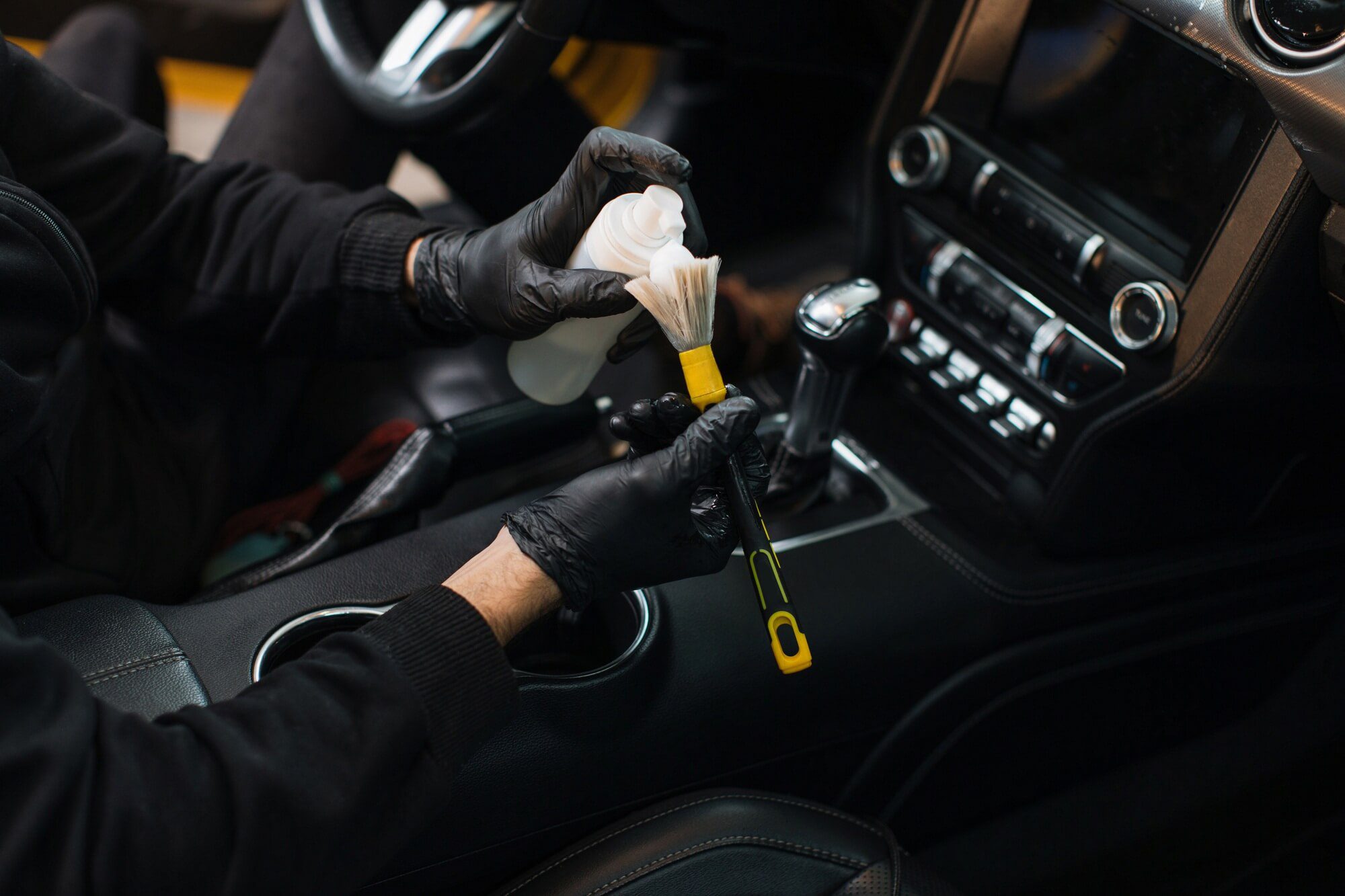
Coastal damage does not stop at the paint. Salt and sand track into your interior on shoes and clothing, and Miami’s humidity creates the perfect conditions for mold, mildew, and accelerated wear on leather, fabric, and plastic surfaces. A few habits make a significant difference:
Vacuum floor mats and carpets weekly, sand and salt particles act as an abrasive that grinds into carpet fibers and degrades them faster than regular dirt
Condition leather seats every two to three months since coastal humidity dries out leather differently than dry climates, causing it to crack along seam lines first
Use a UV-blocking dashboard protectant on all plastic and vinyl surfaces to prevent the fading and cracking that South Florida sun causes within one to two years on untreated interiors
Keep a microfiber towel in the car to wipe down surfaces after beach visits, before salt residue dries and becomes abrasive
For a complete interior care routine built specifically for Miami’s climate, the car interior detailing guide covers everything from deep cleaning to long-term maintenance in detail.
Window Tinting as Heat and UV Defense
Your windows are the primary path for UV radiation and heat into your cabin. On a Miami summer day, interior temperatures in an untinted car can exceed 150 degrees Fahrenheit, which accelerates the degradation of dashboards, seat materials, and any electronics mounted near the windshield. UV rays also fade upholstery and crack leather far faster than humidity alone.
Professional window tinting blocks a significant percentage of both UV rays and solar heat, keeping your interior cooler, protecting your surfaces, and reducing the load on your air conditioning system. For coastal drivers who are already investing in exterior protection, tinting is the logical complement that extends that protection to everything inside the cabin.
Monthly Coastal Car Care Checklist
Use this as your ongoing maintenance rhythm if you live or park near the coast:
Every 1 to 2 weeks: Full exterior wash using the two-bucket method, including undercarriage rinse
Monthly: Inspect paint for new water spots, bird dropping etching, or areas where the coating may be thinning; vacuum interior and wipe down all surfaces
Every 3 months: Clay bar treatment if the paint feels rough or contaminated; leather conditioning if applicable
Every 6 months: Professional inspection of your ceramic coating’s hydrophobic performance; top-up spray coating if needed
Annually: Full professional detail to assess paint condition, address any defects that have developed, and ensure protective layers are performing as expected
If you want a professional set of eyes on your paint’s current condition, our mobile detailing service in Miami comes directly to you, no drop-off required.
Frequently Asked Questions